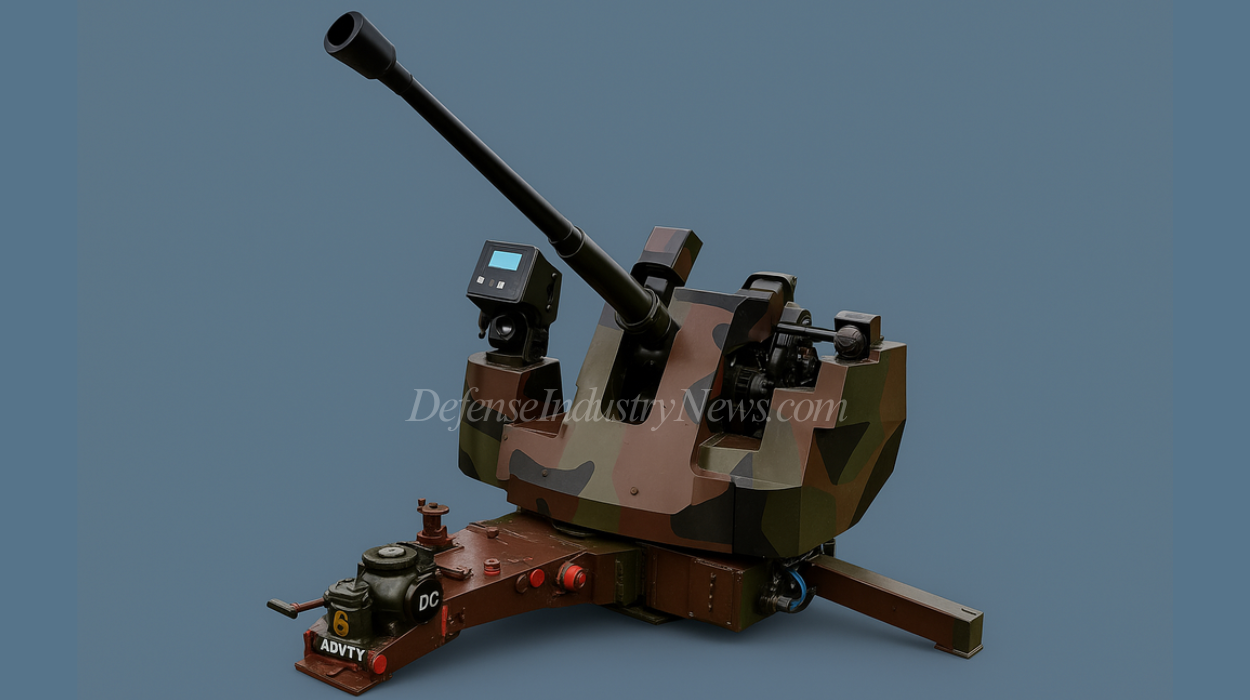

India’s air defense network has turned to an unexpected yet highly effective asset in countering drone threats — the upgraded L-70 Bofors guns. Originally developed in the mid-20th century, the system has been modernized to address the challenges of contemporary warfare, particularly the growing use of unmanned aerial vehicles (UAVs).
Security assessments following one of the region’s largest reported drone incursions indicate that hundreds of UAVs were deployed toward Indian military and strategic targets last year. In response, India activated its layered air defense systems, with the upgraded L-70 Bofors gun playing a crucial frontline role.
Legacy System, Modern Capability
First introduced in the 1940s and later inducted into Indian service in the 1960s, the L-70 has undergone significant upgrades in recent years. Enhancements include advanced electro-optical targeting systems, radar integration, and specialized counter-drone capabilities.
These upgrades have enabled the system to effectively engage low-flying, slow-moving, and hard-to-detect aerial threats — a category where traditional missile-based air defense systems may be less efficient or cost-effective.
Countering Evolving Threats
The increased use of drones in regional conflicts has altered battlefield dynamics. Analysts note that adversaries, including Pakistan, are investing in large-scale UAV deployments for surveillance and strike missions. This shift has prompted India to adapt its defense systems to counter swarm-style and low-altitude threats.
The L-70’s rapid-fire capability, combined with improved targeting precision, makes it particularly effective against such scenarios. Its relatively low operational cost compared to missile systems also allows sustained engagement during prolonged threats.
Strategic Significance
Defense experts say the success of the upgraded system highlights a broader trend: the revival and modernization of legacy platforms to meet new-age warfare requirements. Rather than relying solely on expensive next-generation systems, militaries are increasingly upgrading proven equipment for specialized roles.
For India, this approach supports both operational readiness and cost efficiency while strengthening layered air defense coverage across sensitive regions.
What It Means for Future Warfare
The effectiveness of the L-70 underscores the growing importance of hybrid defense strategies that combine modern technology with legacy systems. As drone warfare continues to evolve, adaptable and scalable solutions are expected to play a central role in national security planning.
India’s experience suggests that even decades-old systems, when upgraded with advanced technology, can remain highly relevant on today’s battlefield.

Leave a Reply